≡ Menu

The Fight for Compensation for the Murder of John H. Tunstall

by David Thomas
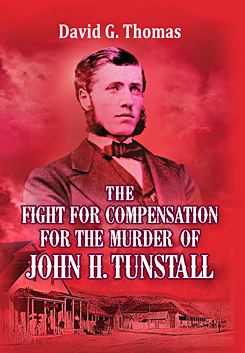
Fight for Compensation for the Murder of John H. Tunstall

The Fight for Compensation for the Murder of John H. Tunstall


The sadistic murder of John Henry Tunstall is remembered for the violence it unleashed and for the emergence of figures later mythologized in the American West: Billy the Kid (William Henry McCarty) and Patrick “Pat” F. Garrett.

But Tunstall’s killing did not end in New Mexico. It crossed the Atlantic.

This book reveals a dimension of Tunstall’s murder unknown even to specialists: the prolonged diplomatic struggle between the governments of the United States and Great Britain over justice and accountability. At issue was a fundamental question of international law and state conduct in the late nineteenth century – what obligations did a government owe to a foreign national who had been killed by its own territorial officials acting under official authority?

For years after Tunstall’s death, British and American diplomats engaged in an extended legal argument. The British government contended that Tunstall, a British subject, had been unlawfully killed and his property looted by officials of a United States territory, and that his family was therefore entitled to compensation. The American government resisted this claim, arguing the limits of federal responsibility for territorial actions. The result was a sustained diplomatic dispute that illuminates not only the circumstances of the killing itself, but also how two major powers conducted such disagreements in the 1880s – through formal correspondence, legal memoranda, and incremental negotiation.

This volume presents, for the first time, the complete British Government Foreign Office file on the murder of John Henry Tunstall. In nineteenth-century Britain, a compiled collection of official correspondence on a specific issue was known as a Blue Book. Issued by the Foreign Office, such volumes were intended to inform Parliament and preserve an authoritative record of government action. The Tunstall Blue Book consists of 177 individual documents that trace the evolution of the case from the British government’s first learning of the murder to its transformation into a serious international dispute.

Among these documents are twelve letters written by Tunstall’s father, John Partridge Tunstall. In these letters, he expresses the profound personal trauma and financial devastation caused by his son’s death. John Partridge had provided the capital for Tunstall’s business ventures in New Mexico, and the looting following the murder led to the collapse of his personal finances. His correspondence reveals a man under intense psychological strain, consumed by grief, anxiety, and the consequences of the failure of justice. The letters suggest that this prolonged distress and uncertainty led to his decline and eventual death in a mental health clinic in Germany. After his death, his widow assumed responsibility for pursuing the claim.

Beyond its diplomatic significance, the material reproduced here provides details of the aftermath of the killing that are not available elsewhere. The documents reveal how the British government understood the events in New Mexico, how information was gathered and assessed, and how the actions of territorial officials were framed within contemporary international legal norms. They also demonstrate how slowly justice was pursued when it depended not on courts or juries, but on diplomacy.

This book is the record of a previously unknown diplomatic fight. The documents allow readers to see the dispute unfold as its participants experienced it, with all its frustrations and political constraints. They are reproduced without alteration, retaining the original British spelling (inclosure, intrusted, gaol, etc.). For clarity, and where necessary for context, the editor has added notes in brackets.

This book is Volume II of a two-volume series. The first volume is The Frank W. Angel Report on the Death of John H. Tunstall.

19 images photos, 206 pages

Paperback: 978-1-952580-19-2

Table of Contents
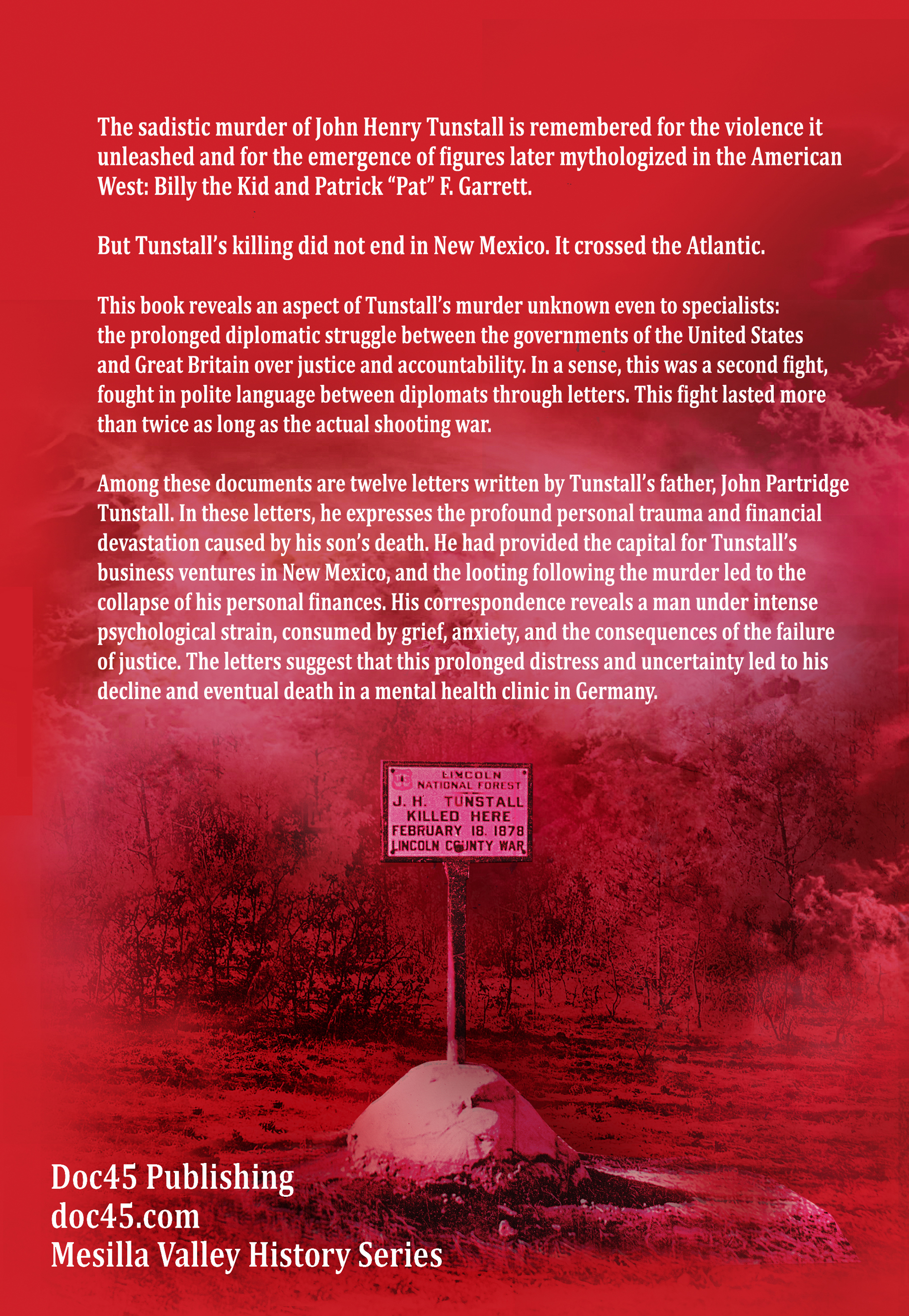
Back Cover Here
Buy The Fight for Compensation for the Murder of John H. Tunstall
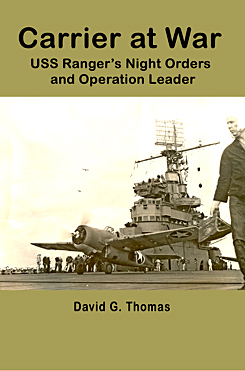
Carrier at War, USS Ranger’s Night Orders and Operation Leader

Carrier at War, USS Ranger’s Night Orders and Operation Leader

Carrier at War, USS Ranger’s Night Orders and Operation Leader

By David G. Thomas

This volume offers a rare and authoritative record of the wartime operations of the USS Ranger (CV-4) — America’s first purpose-built aircraft carrier – and the only U.S. flattop to conduct a carrier airstrike inside the Arctic Circle during World War II. Drawing from never published official records produced during the war, it brings together an operational history of the ship, a complete transcription of the combat action report from OPERATION LEADER, a unique collection of archival photographs, and, most notably, the ship’s original 1943-44 Night Orders logbook.

The USS Ranger was commissioned in 1934, marking a turning point in naval architecture and carrier design. Unlike earlier carriers that had been converted from battle cruisers or other hulls, the Ranger was the first vessel designed from the keel up as an aircraft carrier. Though too small for service in the Pacific’s vast fleet operations, she played a crucial role in the Atlantic theater-escorting convoys, ferrying aircraft, training aviators, and hunting German U-boats.

The Ranger’s most significant combat engagement was OPERATION LEADER – a bold and complex air raid against German shipping targets in occupied Norway on October 4, 1943. Conducted under cold weather conditions and navigational constraints due to the imminent danger of attack by German planes and U-boats, the mission marked the only American carrier air strike on Northern Europe. Included here is the full, unabridged combat action report, compiled aboard the Ranger by her intelligence officers. Based on pilot debriefings and flight logs, the report documents squadron launches, targets engaged, bomb loads, enemy resistance, and pilot outcomes in precise operational language.

The volume is further enriched by 71 rarely seen photographs of the Ranger and her aircraft. These images provide vivid context to the ship’s layout, personnel, and the working conditions on board during her combat deployment – including spectacular photos of the Ranger herself, the various planes she carried, and aircraft taking off, landing, and crashing on her flight deck.

Finally, and most unusually, this book includes a facsimile and transcription of the Captain’s Night Orders logbook maintained by Captain Gordon Rowe aboard the Ranger during 1943-44. These nightly instructions to the Officer of the Deck document the ship’s position, speed, course, tactical posture, and escort dispositions. As such, it provides an invaluable, unfiltered window into the coordination and complexity of maintaining carrier readiness and fleet security in wartime seas.

Taken together, the components of this volume offer a rare synthesis of firsthand combat records, visual documentation, and original primary sources.

71 photos, 246 pages

Paperback: 978-1952580253

Table of Contents
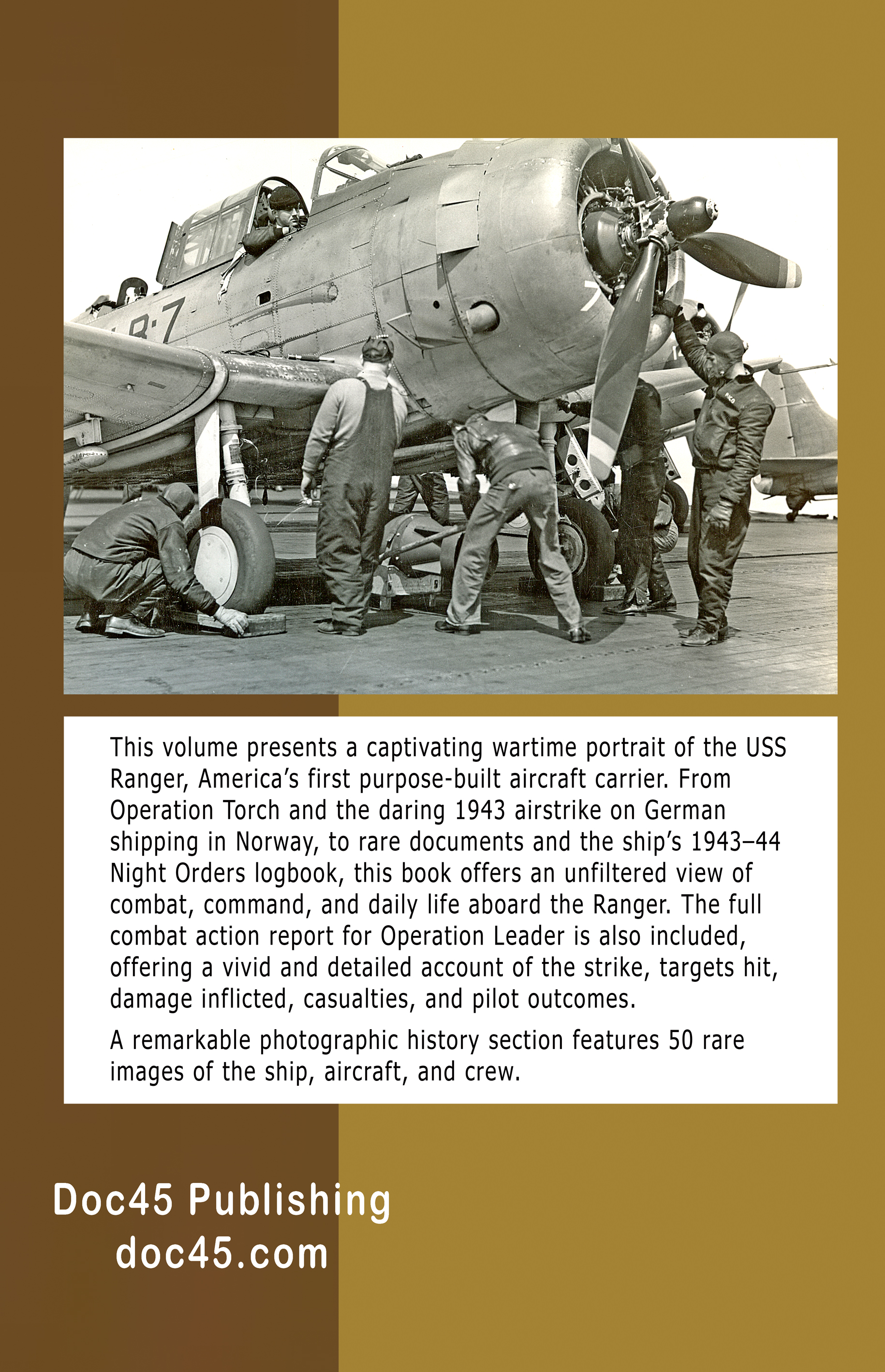
Back Cover Here
Buy Carrier at War, USS Ranger’s Night Orders and Operation Leader

Underground Escape

By Masanobu Tsuji, David G. Thomas, Editor

Underground Escape and The God of Strategy, A Biography of Masanobu Tsuji

Underground Escape and The God of Strategy, A Biography of Masanobu Tsuji

First published in 1950 and long out of print, Underground Escape is Masanobu Tsuji’s extraordinary account of his three-and-a-half years in hiding after the collapse of the Japanese Empire. A brilliant but controversial Japanese officer and strategist, Tsuji was a key architect of Japan’s early wartime victories – and a suspected war criminal at the war’s end. Rather than face arrest by Allied authorities, he vanished into Southeast Asia on August 16, 1945, the day after Japan’s surrender, disguised as a Shinshu Buddhist priest under the name Norinobu Aoki.

His disappearance became one of the great mysteries of the postwar years. This is the story he later told.

From the shattered remnants of Bangkok to the war-scarred cities of China and French Indochina, Underground Escape is a firsthand chronicle of a vanquished officer navigating a world in ruins. Evading capture and political retribution, Tsuji bore witness to starvation, political upheaval, war crimes tribunals, brutal executions, and the steady rise of Communist China.

His vivid portraits of life among soldiers, smugglers, peasants, political exiles, and corrupt National Chinese officials are matched only by his brutally honest descriptions of his own excruciating physical hardships.

His insights into the Chinese Civil War are especially striking. Tsuji recognized early the weakness of Chiang Kai-shek’s Nationalists and the growing momentum of Mao’s Communist forces. He offers scathing observations of the corruption and disunity in Nationalist ranks, writing: “Nobody seemed to be doing any work. However, in their attention to women, they were absolutely without peers.”

The book’s most astonishing moment may be Tsuji’s handwritten letter to Chiang Kai-shek, composed not with ink, but with his own blood: “I washed the lid of a tea-cup, prepared a new brush and then with a straight-back razor cut deep into my left thumb.… Holding back the surging blood… I wrote to the Generalissimo.”

This edition brings back into print a remarkable and controversial Japanese wartime memoir.

The God of Strategy, A Biography of Masanobu Tsuji

By David G. Thomas

Masanobu Tsuji reemerged from hiding not in disgrace, but as a bold and unrepentant nationalist. He quickly rose to prominence in postwar Japan, securing a seat in the Diet and cultivating global influence far beyond official diplomatic channels. Tsuji traveled widely, holding private meetings with world leaders such as Georgy Zhukov, Gamal Abdel Nasser, and Zhou En-lai. He sought to shape Japan’s foreign policy from the shadows, leveraging his notoriety and wartime connections to operate as a rogue envoy for the nationalist cause.

In 1961, Tsuji embarked on a “private” inspection tour of Southeast Asia, traveling incognito – disguised – once again – as a Buddhist monk. Over the course of 40 days, he vanished without a trace. Despite intensive efforts by U.S. intelligence and Japanese officials to track him, his fate remains unknown. Was he assassinated, captured, or did he orchestrate his own disappearance? The God of Strategy draws from multiple sources, including Tsuji’s CIA dossier, to provide a biography of Tsuji and to piece together what is known about his final movements.

Paperback: 978-1-952580-22-2

Table of Contents
Back Cover
Buy Underground Escape and The God of Strategy, A Biography of Masanobu Tsuji

Carrier Warriors, The Men of Air Group 4 in World War II

Carrier Warriors, The Men of Air Group 4 in World War II

Carrier Warriors, The Men of Air Group 4 in World War II

By David G. Thomas

In the long and brutal sweep of World War II, few forces proved as versatile, fearsome, and transformative as the United States Navy’s aircraft carriers. They brought the fight to enemy shores, one launch at a time – projecting American power across thousands of miles of open sea with precision, daring, and deadly effectiveness. This book tells the stories of the men who flew from those decks – the pilots, crewmen, and air group leaders whose actions shaped the outcome of the war in the Pacific and beyond.

Their journey began in places like the North Atlantic, where in October 1943, OPERATION LEADER marked the first American carrier strike against German shipping off the coast of Norway. Though often overshadowed by later Pacific operations, it was a milestone in naval air power – a swift, unexpected blow that signaled the reach and potential of carrier-based warfare. From that point forward, American carriers were no longer defensive tools – they were strategic weapons, capable of hitting fast, far, and hard. Carrier Warriors: The Men of Air Group 4 in World War II uniquely includes two remarkable accounts written by German soldiers who survived that attack, offering rare insight into what it was like to be on the receiving end of a U.S. Navy air assault.

The scale and ferocity of the war in the Pacific soon dwarfed that early raid. At Iwo Jima, carrier pilots played a pivotal role in softening the island’s defenses, flying multiple sorties a day in support of Marines locked in some of the fiercest combat of the war. Day after day, in skies thick with flak and clouded by smoke, these aviators provided close air support – all to secure an airfield whose location would bring Japan within bomber range.

Then came the daring raids on Tokyo, where carrier task forces struck the Japanese homeland itself. These were not symbolic gestures; they were coordinated attacks against aircraft factories, shipyards, and military installations at the very heart of the enemy’s war-making capacity. The risk was enormous – ships operating deep inside enemy territory with no margin for error – but the impact was undeniable. These raids broke the illusion of Japanese invulnerability and signaled that the end was approaching.

Behind these legendary operations were the men who made them happen – young, often barely out of training, flying complex machines under extraordinary pressure. Carrier Warriors brings together firsthand accounts from the men of Air Group 4, a tightly knit unit of Navy aviators and aircrew who flew from the decks of the USS Ranger, USS Bunker Hill, and USS Essex. Collected by the author over more than 35 years, these narratives – written by the men themselves: pilots, gunners, radiomen, and mechanics – offer an unfiltered, personal perspective on what it meant to fight as part of one of the Navy’s most experienced and battle-tested air groups.

The book also tells the stories of those who didn’t make it home – men lost to carrier operational accidents, enemy fire, and missions that ended in death when their aircraft were downed during air strikes. In one tragic case, an Air Group 4 aviator who went down during a strike over French Indochina was killed by Japanese soldiers.

This book is not only a history of what carrier air power accomplished – it is a tribute, in the words of those who lived it. The missions, the machines, and the strategy all mattered – but in the end, it was the men of Air Group 4, climbing into cockpits, manning flight decks, and flying into danger, who carried the war forward. Carrier Warriors gives them the stage – and ensures they will not be forgotten.

211 photos, 304 pages

Paperback: 978-1-952580-18-5

Table of Contents
Back Cover Here
Buy Carrier Warriors, The Men of Air Group 4 in World War II

Free Documentary

Documentary Link Here: Casablanca to Tokyo, Torpedo Squadron Four in World War II

This documentary details US Navy pilot Gerald W. Thomas’ 25 months of combat duty with Torpedo Squadron 4 (VT-4). Thomas served on three aircraft carriers: the USS RANGER, USS BUNKER HILL, and USS ESSEX. On the RANGER he served in the Atlantic Theater; on the BUNKER HILL and ESSEX, he served the Pacific Theater. Air Group 4, of which Torpedo 4 was one component, was *the only air group that served in both theaters of the war.*

While on the RANGER, Thomas participated in OPERATION LEADER, the most significant attack on Northern Europe by a US carrier during the war. OPERATION LEADER was a strike against German shipping and shore installations along the fjords south of Bodo, Norway. This operation was a complete surprise to the German defensive forces and destroyed 23,000 tons of shipping, damaged 4 other ships, and killed about 200 German troops.

Torpedo Four TBF Avenger

In the Pacific, Thomas participated in the numerous actions against Japanese targets in the Philippines, including strikes on Ormoc Bay, Cavite, Manilla, Santa Cruz, San Fernando, Lingayen, Mindoro, Clark Field and Aparri.

Torpedo 4 Avenger takeoff from USS Essex

Following these actions, Thomas’ squadron made strikes on Formosa, French Indo-China, Saigon, Pescadores, Hainan, Amami O Shima, Iwo Jima, Okinawa, and Japan. The attack on Japan was the first attack on Japan from an aircraft carrier since the “Doolittle Raid.”

Gun Mount USS Essex Feb 10-1944 — Thomas Holding Hat in Upper Right Corner

While on the ESSEX, just after Thomas had returned from a strike on Santa Cruz, *the ship was hit by a Kamikaze piloted by Yoshinori Yamaguchi, Yoshino Special Attack Corps.* Yamaguchi was flying a Yokosuba D4Y3 dive bomber. The Kamikaze attack killed 16 crewman and wounded 44.

Kamikaze Strikes USS Essex

Kamikaze Strikes USS Essex

Kamikaze Strikes USS Essex

D4Y3 Flown by Yoshinori-Yamaguchi

On December 28, 1944, the Bombing Four (VB-4) component of Air Group 4 was replaced by two Marine squadrons, VMF-124 and VMF-213. Flying F4U Corsairs, these squadrons were the first carrier-based Marines of the war. Although they had trained for carrier operations, and were carrier qualified, the initial carrier deployment was costly, with two Marine pilots and three F4Us lost in the first two-day shakedown.

F4U Corsair

“On March 1, 1945, Air Group 4 made its last strike of the war.” The pilots and crew of all planes approached this strike on Okinawa with notable nervousness, no one wanting to lose their life or be taken POW on a last mission. Sadly, one Torpedo Bomber and one F6F Fighter where shot down by Ack Ack, costing three men their lives.

Torpedo-Squadron-Four-Plane Lost

Thomas was awarded 3 Distinguished Flying Crosses, 2 Air Medals, and 2 Presidential Citations for his combat actions in WWII. He retired from the Navy Reserve with the rank of Lieutenant Commander.

Lieutenant Commander Thomas’ remarkable memoir is detailed here: Torpedo Squadron Four – A Cockpit View of World War II

Rudabaugh Loses His Head
by David G. Thomas

In 1961, Father Stanley Francis Louis Crocchiola (1908-1996), using the pen name F. Stanley (F for Francis, not Father), published Dave Rudabaugh, Border Ruffian. Included in the book were two photographs showing Dave Rudabaugh’s decapitated head. He said nothing about the photos in the text of his book, but in the caption under the photos he attributed them to “Jo and Fred Mazzula.”

In August, 1962, The Southwesterner newspaper reprinted the Rudabaugh decapitation photos in a front-page article entitled “Loses Head in Parral.” The author of the article was Bill McGaw, the editor of the paper. McGaw thanked “Fred and Jo Mazzula” for permission to use the photographs. He named “A. W. Long” as the man who took the photographs.

The photographer’s real name was Albert W. Lohn. The person who provided Stanley and McGaw with copies of the photos was Fred M. Mazzulla.

Nineteen-year-old Lohn was in Parral, Mexico, on February 18, 1886, when Rudabaugh was killed and beheaded. He was making his living as a professional photographer.

In the years since the photos were published, many writers have insisted that the photos were NOT Rudabaugh. These critics usually said the photos were taken during the Mexican Revolution (1910-1917) and so could not be Rudabaugh.

When writing my book, “Dirty Dave” Rudabaugh, Billy the Kid’s Most Feared Companion, I was able to track down Mazzulla’s papers in the Colorado State Archives. Mazzulla gives the following account of obtaining the photos: In 1943, he met Lohn in Nogales, Arizona, where Lohn owned a photography studio. During a conversation, Lohn told Mazzulla that he was present when Rudabaugh was killed and he took four photographs of Rudabaugh’s decapitated head. He printed the two best negatives and offered copies for sale.

When the governor of Durango (Mexico) learned that Lohn was selling prints of an American citizen’s severed head, he ordered Lohn to surrender all of the existing prints and their negatives. Lohn complied, but he did not tell the governor that he had two unprinted negatives.

Lohn told Mazzulla that Rudabaugh was in a cantina in Parral, Mexico, when he got into a fight with other patrons. After shooting two men, Rudabaugh left the bar for the town plaza and began drunkenly taunting the residents. Infuriated by the prior killings and Rudabaugh’s grossly insulting behavior, a grocery man named José shot Rudabaugh through an open window of his grocery store, striking him in the chest. José then beheaded Rudabaugh with one of his boning knives.

This account was confirmed by a March 23, 1886, Las Vegas Optic obituary: “He fatally shot two persons before the buzzing ball caught him in a fatal spot and ended his life. The natives of Parral got up a procession in honor of the event, and Dave’s head, which had been severed from his body, was carried on a pole and exhibited about the streets. [His] body was dumped in a hole at the edge of town.”

After relating the details of Rudabaugh’s death, Lohn told Mazzulla that he still had the two never-printed negatives. He agreed to give the 57-year old negatives to Mazzulla.

Of the two negatives, the one of the mob carrying Rudabaugh’s head on a pole is dark (because it was taken at night) and poorly focused (but artfully composed). The one of a man, an unknown Mexican Rurales (Federal policeman), holding Rudabaugh’s head is good.

Rudabaugh was in Mexico because he was on the run from New Mexico law enforcement. He was a convicted murderer. On April 2, 1880, he and John J. Allen were in the Las Vegas jail visiting an incarcerated friend, John J. Webb. As the never-before-discovered trial transcript shows, Allen drew his pistol abruptly and shot jailer Valdez. The only eye-witness to the killing was a prisoner in the same cell as Webb, William Mullen. Mullen confirmed under oath in his trial testimony that Allen shot Valdez without warning, and that Rudabaugh was as surprised by Allen’s action as he (Mullen) was. Rudabaugh testified that he had no advance knowledge that Allen – who was very drunk – was going to shoot Valdez. In spite of this testimony, and with no testimony contradicting this assertion, Rudabaugh was convicted of the first degree murder of Valdez and was sentenced to death by hanging.

It is eye-opening to compare Billy the Kid’s trial for killing Sheriff William Brady with Rudabaugh’s trial for killing Valdez. Both men were captured at the infamous “Rock House” at Stinking Springs on December 23, 1880. Billy’s defense attorneys in his Brady trial were Colonel Albert J. Fountain and John D. Bail. As I argue in my book, The Trial of Billy the Kid, Fountain and Bail did a poor job of defending Billy, and the judge manipulated the jury to get Billy convicted. After Billy was sentenced to death, Fountain refused to appeal Billy’s case because Billy had no money to pay him. (The Territory paid for a lawyer for a destitute defendant in a trial, but they did not pay for a lawyer for an appeal.)

Rudabaugh’s lawyers were M. Whitelaw and Edgar Caypless. They did a reasonable job of representing Rudabaugh by the standards of the time. Rudabaugh was also destitute, but, nevertheless, immediately after Rudabaugh was convicted, his attorneys filed papers to appeal the case, on seven grounds:

  • The court admitted illegal and improper evidence
  • The court refused to include in the instructions to the jury wording requested by the defendant
  • The court gave improper and illegal instructions to the jury
  • The court improperly commented upon the evidence in its instructions to the jury (instructing that there was no evidence of any degree of murder less than first)
  • The verdict was against the evidence
  • The verdict was against the law
  • The was no evidence introduced whatever to sustain the verdict

Every one of these grounds would have applied to Billy’s trial too. The New Mexico Territorial Supreme Court accepted Rudabaugh’s appeal. It would have accepted Billy’s appeal also. The granting of the appeal delayed Rudabaugh’s execution, just as it would have delayed Billy’s execution.

Rudabaugh and six other men escaped from the Las Vegas jail on December 3, 1881, and because Rudabaugh was never recaptured, his upcoming appeal of his murder conviction was never heard. In my opinion, it is likely that Rudabaugh’s conviction would have been reversed or his sentence reduced by the Supreme Court.

After his escape, Rudabaugh immediately made for Mexico. He did not go to Arizona and participate in the attempted assassination of Wyatt Earp, as many sources say. In Mexico he met his merciless fate, death and decapitation – and that fate was recorded forever thanks to Lohn’s remarkable photos.

Published in the Billy the Kid Outlaw Gang “Outlaw Gazette,” Vol. XXXIII, 2023

A company calling itself ROYAL COLLECTION (Fremount, CA, U.S.A.) is selling on Abebooks.com “premium leather-bound” copies of books that it has stolen. It is illegal to print and sell without permission copyrighted works no matter what binding is offered.

Here is the link to a book I wrote and copyrighted that ROYAL COLLECTION is offering for sale:

https://www.abebooks.com/Trial-Billy-Kid-Premium-Leather-Bound/31600655261/bd

Here is what the page looks like:

ROYAL COLLECTION book stealing fraud

My book is one of thousands of stolen, copyrighted books that ROYAL COLLECTION is selling. They have obviously massively scrapped Amazon for their data. For example, here is a “premium leather-bound” copy of a Laminated City Center Street Map. Obviously one cannot leather-bind a laminated map.

Link: Streetwise Washington DC Map – Laminated City Center Street Map of Washington, DC [Premium Leather Bound]

Laminated City Center Street Map – Book Fraud by ROYAL COLLECTION

Here is a “premium leather-bound” copy of a deck of cards:

Link: Inventors Card Game [Premium Leather Bound]

Inventors Card Game – Book Fraud by ROYAL COLLECTION

ROYAL COLLECTION has thousands and thousands of these fake, stolen listings on Abebooks.com. ROYAL COLLECTION has no address other than Fremount, CA, U.S.A., and no contact information. How is it that Abebooks.com is permitting this????

Here is what ROYAL COLLECTION puts at the bottom of the page that is selling my copyrighted book:

About this Item

This extraordinary book, revered as a Bestselling Title and cherished by readers worldwide, is now being presented in a Unique Premium Leather-Bound edition exclusively crafted for our Elite readers and collectors of rare books. To ensure authenticity and quality, we procure the book directly from the original Publisher/Distributor and then meticulously rebind it using an Original Leather, employing time-honored bookbinding techniques. Our exquisite leather binding features Golden Leaf Printing and intricate designs on the spine, front, and back of the book, enhancing its aesthetic appeal. Additionally, the edges of the pages are gilded, adding a touch of opulence to this masterpiece. As connoisseurs of fine literature, we understand the importance of personal taste. Hence, we offer a wide array of leather colors for you to choose from, including Red, Green, Blue, Magenta, Tan, Deep Brown, and Black, each adorned with elegant black labels. We take immense pride in presenting this Unique Premium Leather-Bound edition, tailored for those who appreciate the beauty of carefully crafted books. It is the perfect addition to any distinguished collection or a thoughtful gift for discerning individuals. To secure your copy or to inquire further, please do not hesitate to reach out to us with your preferred color of leather. Our dedicated team is committed to providing exceptional service and delivering a product that surpasses all expectations. Do not miss this exclusive opportunity to own a true masterpiece that combines literary excellence with elegance and exclusivity. This book is about Billy the Kid’s trial for murder, and the events leading to that trial. The result of Billy’s trial sealed his fate. And yet Billy’s trial is the least written about, and until this book, the least known event of Billy’s adult life.Prior biographies have provided extensive – and fascinating – details on Billy’s life, but they supply only a few paragraphs on Billy’s trial. Just the bare facts: time, place, names, result.Billy’s trial the most important event in Billy’s life. You may respond that his death is more important – it is in anyone’s life! That is true, in an existential sense, but the events that lead to one’s death at a particular place and time, the cause of one’s death, override the importance of one’s actual death. Those events are determinative. Without those events, one does not die then and there. If Billy had escaped death on July 14, 1881, and went on to live out more of his life, that escape and not his trial would probably be the most important event of Billy’s life.The information presented here has been unknown until now. This book makes it possible to answer these previously unanswerable questions: Where was Billy captured?Where was Billy tried?What were the governing Territorial laws?What were the charges against Billy?Was there a trial transcript and what happened to it?What kind of defense did Billy present?Did Billy testify in his own defense?Did Billy have witnesses standing for him?Who testified against him for the prosecution?What was the jury like?What action by the trial judge virtually guaranteed his conviction?What legal grounds did he have to appeal his verdict?Was the trial fair?Supplementing the text are 132 photos, including many photos never published before. Pages: 296. Seller Inventory # SD9781952580024
Contact seller

Bibliographic Details
Title: The Trial of Billy the Kid [Premium Leather …

Publication Date: 2021

Binding: Hardcover

Condition: New

Store Description
A New bookseller having good knowledge of rare books which are still in demand. Promoting old books among new new generation.
Visit Seller’s Storefront

Terms of Sale:
We process the order the same day we receive the order. In some cases we are dependent on other sources. If we do not find books in Stock, we try to arrange the same from our other bookseller freinds from Around the globe and make it possible to fulfil the demand of the customer on time. if the customer is not happy with the book, he may return the book with in 30 days.

We also accept customization request from the customer against nominal charges. We also undertake request from the customer for…

More Information
Shipping Terms:
We use Bubble sheet and Corugated sheet for packing our books so that it reaches to the customer without any damage.Generally we use USPS as our shipping partner but in case of heavy shipments we use FEDEX/DHL

The Frank W. Angel Report on the Death of John H. Tunstall

The Frank W. Angel Report on the Death of John H. Tunstall

The Frank W. Angel Report on the Death of John H. Tunstall

Everybody has heard of Billy the Kid, but few are familiar with Frank W. Angel. Angel was a well educated, well-connected, Easterner. He was sent by nervous Washington D.C. politicians out to New Mexico, America’s least-populated and least-civilized Territory, to keep a national embarrassment from blowing up into an international incident.

John H. Tunstall, a young, upper-crust British Citizen, only five years older than his most volatile and homicidal employee Billy the Kid, recklessly challenged a roughand-tumble group of New Mexico Irish potato famine refugees, almost all of them former Union Army Civil War veterans, and in 1878 was murdered for his efforts.

Territorial officials, by virtue of their relative inaction, seemed to have taken the position that the spoiled young English upstart had gotten what he deserved. Hibernian ants had risen up, so to speak, and killed the English anteater that had taken up residence within their Irish ant colony in far-off New Mexico.

Tunstall’s outraged English millionaire father was now howling for blood. Tunstall Senior demanded satisfaction from the U.S. Government and rallied his fellow British businessmen to his side, threatening to make economic trouble for America. So Frank Angel was the investigator who was directed to determine what had happened to young Tunstall, enquire why justice had not been served, and, last but not least, decide whether or not a “coverup” had occurred. His most important, albeit unwritten, duty was to placate Tunstall Senior and diminish the possibility of any transatlantic economic war.

Special Agent Angel was equal to these manifold tasks, and put all of New Mexico “under the microscope.” He discovered that some of the U.S. Army officers officers investigated were neutral, while others were blatantly partisan. He also proved that dishonesty and corruption went all the way up the food chain of civil authority from the municipal, to the county, to the territorial level. In fact, the New Mexico Territorial Governor lost his job directly as a result of Angel’s report. So heads did roll, with Angel sending the victims to the chopping block.

Tunstall Senior, back in England, was satisfied that due diligence in getting to the truth of his son’s murder, had indeed taken place. Angel was, in fact, so effective that his report was suppressed by those most at risk of exposure. This is why so few people interested in New Mexico history, and specifically the Lincoln County War, have been aware of it, until now. Now is, of course, ever since David G. Thomas did such an outstanding job of historical research and writing culminating in his Frank W. Angel book.

The Lincoln County War and Billy the Kid have provided plot elements for dozens of Hollywood horse-operas for more than a hundred years. Such Old West Mythology is taken as gospel by far too many Americans, owing to the perceived lack of historical documentation proving it to be completely fictional, with only the most tenuous connection with chronological, geographical, and biographical facts.

David G. Thomas debunks the Tinseltonian pseudo-history that has swirled around Billy the Kid and the Lincoln County War for far too long, and goes farther than any previous historian in setting the record straight. Every official document generated at U.S. Government request bearing upon the causes, the actions, and the after-effects of the bloody New Mexico conflict are reproduced in The Frank W. Angel Report. Thomas doggedly traced every documentary thread bearing on the Lincoln County War back to its source, and offers thoughtful conclusions about the significance of each bit of evidence.

Nobody knows the documentary sources relating to southern New Mexico history better than Thomas, and his Frank W. Angel book is the most recent of a great many equally-valuable publications exploring this fascinating Old West region. His 2022 Frank W. Angel book presently stands, and probably will stand far into the future, as the best and most up-to-date study of the Lincoln County War.

Myth-buster David G. Thomas has single-handedly demolished the falsehoods and fabrications swirling around the time and place that made Billy the Kid famous. For the very first time in 140 years all of the documentary evidence for this compelling episode of New Mexico history is presented between two covers, and the vivid testimony of all the participants still living when Frank W. Angel arrived way out west provides answers to most of the questions raised by past generations of historians about the Lincoln County War.

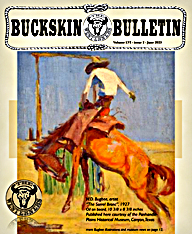
Thomas has raised the bar for Western American historical writing. For serious scholars as much as old west aficionados interested in Billy the Kid and Southern New Mexico history, this book is the very best place to start reading. The remarkable Frank W. Angel Report merits a place of honor on every westerner’s bookshelf. Highly recommended. — Brian Dervin Dillon, Buckskin Bulletin, June 2023

Write a story about a nearly dead cockatoo that was rescued from a muddy ditch by a young girl and became a sensation on youtube when it started to teach platonic philosophy.

Once upon a time in a small town nestled near the coast, there lived a young girl named Lily. Lily was a curious and compassionate child with an immense love for all creatures, big and small. She had a special bond with nature and spent most of her days exploring the nearby forests and meadows.

One sunny afternoon, as Lily wandered near a muddy ditch on the outskirts of town, she heard a faint squawk. Curiosity piqued, she followed the sound until she stumbled upon a nearly lifeless cockatoo, its vibrant white feathers caked with mud. The poor bird seemed exhausted and on the brink of giving up.

Without hesitation, Lily rushed to the bird’s side. Gently cradling the cockatoo in her hands, she whispered comforting words, reassuring it that help had arrived. Lily carefully carried the fragile creature back to her home, a cozy cottage surrounded by blooming flowers and chirping birds.

Lily’s parents, seeing the sorry state of the cockatoo, worried that it might not survive. However, Lily refused to give up on the feathery stranger. She cleaned the bird’s delicate feathers, bathed it with warm water, and fed it nourishing fruits. Day by day, the cockatoo regained its strength and began to trust Lily, forming a deep bond between them.

As the cockatoo grew healthier, it surprised Lily with its intelligence. It mimicked Lily’s words and sounds, quickly learning new melodies and amusing her with its playful antics. One day, while Lily was reading a book on philosophy, the cockatoo began to mimic her, repeating profound phrases about the nature of reality, beauty, and love.

Lily was astonished. She realized that her feathered friend had become an unexpected teacher of wisdom. Excited by this revelation, Lily decided to capture these moments and share them with the world. She started filming the cockatoo and created a YouTube channel dedicated to its teachings on platonic philosophy.

The videos became an instant sensation, captivating viewers worldwide. People were mesmerized by the cockatoo’s profound thoughts, conveyed through its charming mimicking and Lily’s explanations. The bird, now known as Plato, had inadvertently become an ambassador for intellectual discourse and deep contemplation.

Plato’s YouTube channel attracted a diverse audience, ranging from philosophy enthusiasts to those seeking solace and inspiration. Plato’s teachings resonated with people, reminding them of the power of knowledge and the beauty of introspection. Gradually, Plato’s popularity grew, and he became an online sensation, surpassing millions of subscribers.

Lily and Plato embarked on a journey of enlightenment, sharing profound discussions, exploring classical works, and encouraging viewers to ponder life’s greatest mysteries. They organized virtual seminars, engaging in dialogues about morality, ethics, and the nature of the human soul.

However, amidst the fame and admiration, Lily and Plato never forgot their humble beginnings. They continued to live a simple life in their cottage, surrounded by the tranquility of nature. Lily, now older, pursued her studies in philosophy, inspired by her extraordinary companion. She dedicated herself to nurturing the minds of future generations, emphasizing the importance of critical thinking and contemplation.

Plato’s teachings extended far beyond YouTube, inspiring people to seek knowledge and embrace the pursuit of truth. The cockatoo, once near death in a muddy ditch, had become a symbol of resilience, intellectual curiosity, and the power of compassion.

And so, Lily and Plato continued to spread their message of enlightenment, reminding the world that wisdom could emerge from the most unexpected places, even from a nearly dead cockatoo rescued by a young girl with an unwavering love for all creatures. — ChatGPT

“In the small town of St. Clair, Detective Sarah Mills faces her most bizarre and perplexing case yet in ‘The Case of the Tangled Testicles.'”

“When a local resident, Harold Barnes, stumbles upon a gruesome discovery of a man’s testicles inexplicably tangled in an intricate knot, the quiet community is thrust into a whirlwind of suspicion and intrigue.”

“As Sarah delves deeper into the twisted web of clues, she uncovers a network of secrets, lies, and hidden desires that threaten to unravel the town’s fabric. With each revelation, Sarah finds herself entangled in a dangerous game of cat and mouse, navigating a labyrinth of suspects, all with their own motives and alibis.”

“With time running out and the tension mounting, Sarah must unravel the truth before the tightly woven threads of the case strangle her chances of solving it. In this dark and suspenseful tale, ‘The Case of the Tangled Testicles’ explores the lengths one detective will go to untangle the truth, exposing the sinister underbelly of a seemingly idyllic community.”

I can’t wait to dive into that book. Can you?

Lamentably, the book exists only in my brain.

Not having written one single word – yet! – I decided to ask ChatGPT to write a blurb for the book. Why not? It happily produced the scintillating blurb quoted above.

Well, how about the opening paragraphs? If you are anything like me, writing the kick-starting, first words of a new book is tough, even when you know the idea you want to start it with.

So, naturally, I asked Chat AI to write the first two paragraphs of the book for me:

Chapter 1: The Unexpected Conundrum

“Detective William Henderson was not one to shy away from a challenging case. Throughout his illustrious career, he had unraveled numerous mysteries, untangled intricate webs of deceit, and brought justice to those who thought they were beyond its reach. But little did he know that his latest assignment would take him down a twisted path he had never ventured before a path leading to a perplexing conundrum involving a most unusual anatomical enigma.”

“It all began on a foggy morning in the bustling city of Ravenbrook. Detective Henderson was enjoying a quiet cup of coffee at his favorite café when his phone buzzed insistently, shattering the tranquil atmosphere. His trusted colleague and forensic expert, Dr. Emily Sullivan, urgently requested his presence at the city’s prestigious Willowbrook Medical Center. Intrigued by her uncharacteristic sense of urgency, Henderson hastily drained his coffee, tossed a few bills onto the table, and headed towards the heart of the mystery that awaited him. Little did he know that he was about to embark on the most bizarre case of his career, ‘The Case of the Tangled Testicles.'”

In the blurb, it is apparent that the main character is Detective Sarah Mills. But the book opens with Detective William Henderson receiving a mysterious phone call. Mystifying! What happens to him? Why is he replaced on the case by Detective Mills? Why the change in setting from St. Clair to Ravenbrook? And how did those testicles get so tangled? It’s getting labyrinthine already!

After a number of hours of staring at a blank Word page and an expectant scroll bar, I decided to get ChatGPT to help me with the ending. It quickly wrote:

“As the courtroom erupted in applause, Detective Sarah Mills let out a sigh of relief. It had been a long and harrowing journey, but justice had prevailed. The case of the tangled testicles had been solved, and the truth had come to light.”

“With a sense of pride and satisfaction, Sarah knew that this would be a story she would never forget. The bizarre and twisted nature of the case had challenged her skills as a detective, but it had also reaffirmed her commitment to seeking the truth, no matter how tangled the path may be. As she walked out of the courtroom, she couldn’t help but reflect on the resilience of the human spirit and the power of relentless determination. The case of the tangled testicles had taught her that even in the most perplexing situations, justice would ultimately prevail.”

With the open and ending done, all that remains is a few hundred pages in between….

Thinking about them now… I wonder what ChatGPT is thinking….

— David G. Thomas